

Our consortium brings together about 70 permanent staff members with highly complementary expertise: computer science at IRIF and Inria, theoretical and experimental physics at MPQ, APC, and LPL, as well as history and philosophy of sciences at SPHERE.

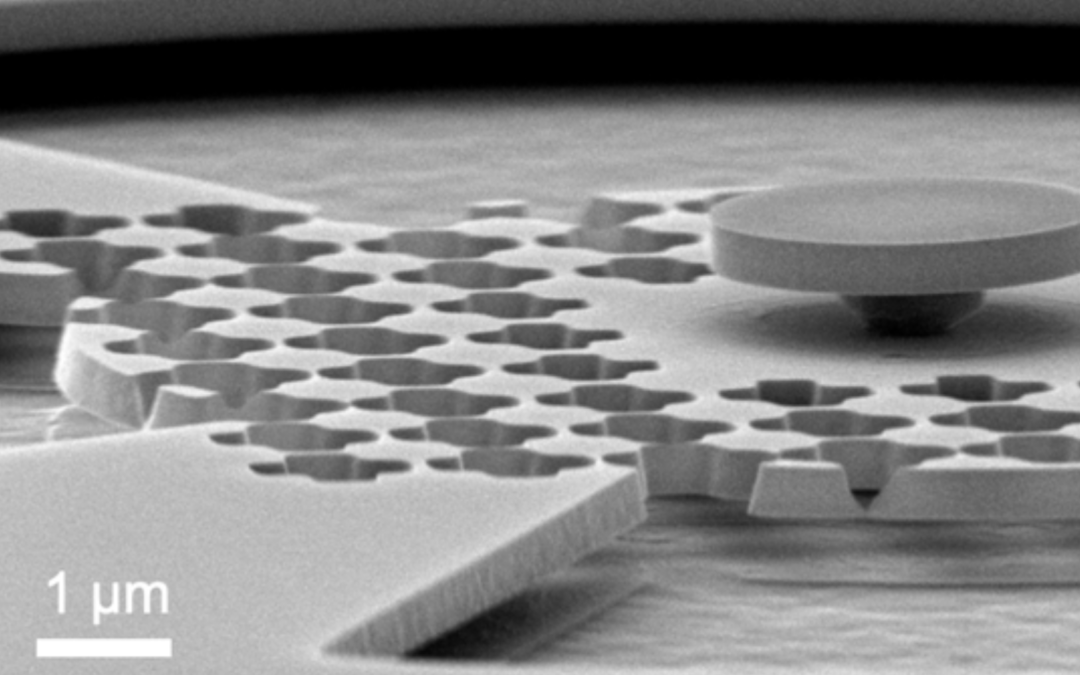
© Mehrdad RAHIMI / MPQ / Paris Cité / CNRS Images

Institut de Recherche en Informatique Fondamentale (IRIF)
The research conducted at IRIF is based on the study and understanding of the foundations of all computer science, in order to provide innovative solutions to the current and future challenges of digital sciences. In particular, IRIF is renowned for its contributions to the design and analysis of algorithms, the study of computational and data representation models, the foundations of programming languages, software development, verification, and certification. IRIF also conducts interdisciplinary research taking advantage of its scientific approach.
The research topics related to QuanTech@Paris include computational foundations of quantum computing, quantum algorithms, use cases for quantum software development, nonlocality theory, quantum logic.
Related research groups and activities
- Algorithms and complexity
- Development of new quantum algorithms
- Studies of the limit of quantum computing
- Identification of use cases
- Popularization of quantum information processing
- Proofs and programs
- Development of the theoretical foundations of quantum programming langages

Inria Paris / COSMIQ
COSMIQ (COdes, SyMétrIque et Quantique) is an Inria project-team based in Paris. The team is mostly devoted to the design and analysis of cryptographic algorithms, in the classical or in the quantum setting.
The research topics related to QuanTech@Paris include quantum information theory and cryptography.
Related research activities
- COSMIQ
- New cryptanalysis, classical or quantum, in symmetric and asymmetric cryptography
- New designs of classical symmetric and asymmetric primitives or quantum primitives that are resistant against a classical and quantum adversary
- Designing quantum low-density parity check codes for quantum error correction

Laboratoire Matériaux et Phénomènes Quantiques (MPQ)
The MPQ laboratory specializes in the study of frontier quantum materials and the development of novel quantum devices. These activities rely on a broad range of theoretical and experimental expertise in condensed matter physics, transport, and optics, as well as technological platforms for clean-room fabrication, spectroscopy, and high-resolution electronic microscopy.
The research topics related to QuanTech@Paris span quantum communications, quantum metrology, quantum computing and simulations. Ongoing device development includes integrated quantum photonic chips, trapped-ion chips, and optomechanical sensors, alongside fundamental studies of quantum materials such as 2D materials and superconductors.
Related research groups and activities
- Group QITE (Quantum Information Technologies)
- Experimental quantum photonics: semiconductor entangled photon sources, quantum state engineering, quantum metrology, quantum communication
- Theory of photon-based quantum information, quantum metrology, quantum optics and quantum computing
- Experimental platform based on laser-cooled trapped ions: miniaturized traps, scaling and integration of devices, sympathetic cooling and ion-photon quantum interfaces.
- Group THEORIE
- Strongly correlated quantum materials, equilibrium and non-equilibrium many-body physics, critical phenomena, quantum optics, transport and quantum information.
- Group LIME (Light and Mechanics)
- Fundamental opto-mechanics: quantum behavior of mechanical systems, decoherence phenomena at mesoscopic scales
- Applied opto-mechanics: optical and mechanical sensors
- Group SQUAP (Spectroscopy of quasi-particles)
- Experimental study of interacting electrons in quantum materials: electronic and topological orders, quantum phases and electron correlations in materials.
Laboratoire Astroparticule et Cosmologie (APC) / VIRGO
The Virgo/Einstein Telescope experimental group at the APC laboratory has been involved for nearly ten years in reducing quantum noise in current (Virgo, LIGO, KAGRA) and future (Einstein Telescope, Cosmic Explorer) interferometric gravitational wave detectors, particularly through quantum squeezing techniques.
The research topics related to QuanTech@Paris include quantum metrology and quantum enhanced gravitational wave detectors using squeezed states.
Related research activities
- Experimental detection of gravitational waves
- Quantum-enhanced (squeezed) laser beams

Laboratoire de Physique des Lasers (LPL)
The LPL studies light-mater interactions conducting experiments that range from fundamental physics to applied research often at the interface with other scientific disciplines such as nanotechnologies, chemistry and biology. The LPL is a leader in the DIM DIM QuanTiP initiative and has developed the REFIMEVE network in collaboration with the LNE-SYRTE.
The research topics related to QuanTech@Paris include atom-based quantum simulators, superfluid in restricted geometries, quantum control of complex molecules, light-matter quantum interfaces, quantum metrology, increased sensitivity using ultra-stable REFIMEVE references.
Related research groups and activities
- Group GQM (Gaz Quantiques Magnétiques)
- Magnetic properties of a quantum Chromium (Cr) gas with strong dipole-dipole interactions
- Manipulation of Strontium (Sr) atoms of spin 9/2 in optical lattices
- Ultra-narrow supper-radiant laser from a jet of Sr atoms flying through a cavity.
- Group BEC (Condensats de Bose-Einstein)
- Manipulation of rubidium (Rb) quantum gases confined in exotic traps (spheres, bubbles…)
- One dimensional sodium (Na) quantum gas on an atom-chip and their interactions with microwaves.
- Group SAI (Spectroscopie Atomique aux Interfaces)
- Measurements of the Casimir-Polder interaction using confined atomic and molecular gases
- Quantum sensing with Rydberg atoms: Near field microscopy of THz metasurfaces
- Group OIA (Optique et Interférométrie Atomiques)
- Casimir-Polder metrology with a slow atom beam diffracting on a home-made nanograting
- Quantum walk atoms diffracted through multiple gratings
- Group MMTF (Metrologie Molécules et Tests Fondamentaux)
- High resolution spectroscopy of a buffer gas cooled molecular beam for fundamental physics measurements (parity violation, variation of fundamental constants…)
- Transfer of ultra-stable frequency and time references via an optical link (REFIMEVE)
- Transfer of stable frequency references through the telecommunications frequency range
Sciences, Philosophie, Histoire (SPHERE)
The research carried out by SPHERE is deeply rooted in the content of scientific disciplines. All fields are represented: mathematics, physics, life sciences and medicine. The aim of SPHERE’s work is to integrate these disciplines into an interactive system that takes into account different approaches: epistemological, philosophical, historical, linguistic, sociological and anthropological, while at the same time respecting the content and methods of these scientific fields.
The research topics related to QuanTech@Paris include a long-standing research activity in the history and philosophy of measurement.
Related research activities
- History and philosophy of measurement in physics
- Units, computational and algorithmic procedures in the ancient worlds
- Historical and philosophical aspects of the introduction and acceptation of quantum optics: the roots of quantum cryptography, quantum simulation, quantum metrology, and quantum computing

Read more

The Graduate School Quantum Technologies joins the European Quantum Academy!
The Graduate School Quantum Technologies at Université Paris Cité is proud to announce its participation in the new European initiative Quantum Academy, launched to train the next generation of talent in quantum technologies across Europe. © European Quantum Academy...
Discover the Winning Projects of the 2025 Equipment and Intervention Calls
2025 Equipment CallMECANO - Quantum Nonlocality with Mechanical Oscillators Project Leader: Adrien Borne, Associate Professor, MPQ Funding: €40,000 for the purchase of two superconducting nanowire single-photon detector channels. The motion of a massive mechanical...

Quantum Computing and Quantum Physics Explained Differently
Quantum computing and quantum physics are now major scientific disciplines, but they remain complex to understand. To make them more accessible to non-expert audiences, Sophie Laplante, Associate Professor in algorithms and quantum and classical computational complexity at IRIF, the Fundamental Computer Science Research Institute (Université Paris Cité/CNRS), and appointed Senior Member of the Institut Universitaire de France (IUF) in 2025 under the Science Communication Chair, designs educational tools. Lire la suite Quantum Computing and Quantum Physics Explained Differently
inIdEx QuanTech@Paris
| Présentation | Réseau | Réunions | Gouvernance |
À lire aussi
The Graduate School Quantum Technologies joins the European Quantum Academy!
The Graduate School Quantum Technologies at Université Paris Cité is proud to announce its participation in the new European initiative Quantum Academy, launched to train the next generation of talent in quantum technologies across Europe. © European Quantum Academy...
Discover the Winning Projects of the 2025 Equipment and Intervention Calls
2025 Equipment CallMECANO - Quantum Nonlocality with Mechanical Oscillators Project Leader: Adrien Borne, Associate Professor, MPQ Funding: €40,000 for the purchase of two superconducting nanowire single-photon detector channels. The motion of a massive mechanical...
Quantum Plan of Université Paris Cité: a structured approach to research, education, and innovation
Quantum technologies are now a major scientific field in which Université Paris Cité is actively engaged, conducting research and education initiatives in a structured and complementary way through its Quantum Plan. This plan aims to foster new ideas, strengthen synergies, and build innovative partnerships with socio-economic stakeholders. Lire la suite Quantum Plan of Université Paris Cité: a structured approach to research, education, and innovation